Claude Skills are the new enterprise agent distribution
Anthropic’s new Skills and the /v1/skills API turn Claude into a modular, versioned runtime for repeatable work. Learn how on demand Skills enable governance, portability, and at scale distribution across apps, code, and the API.
 Talos
Talos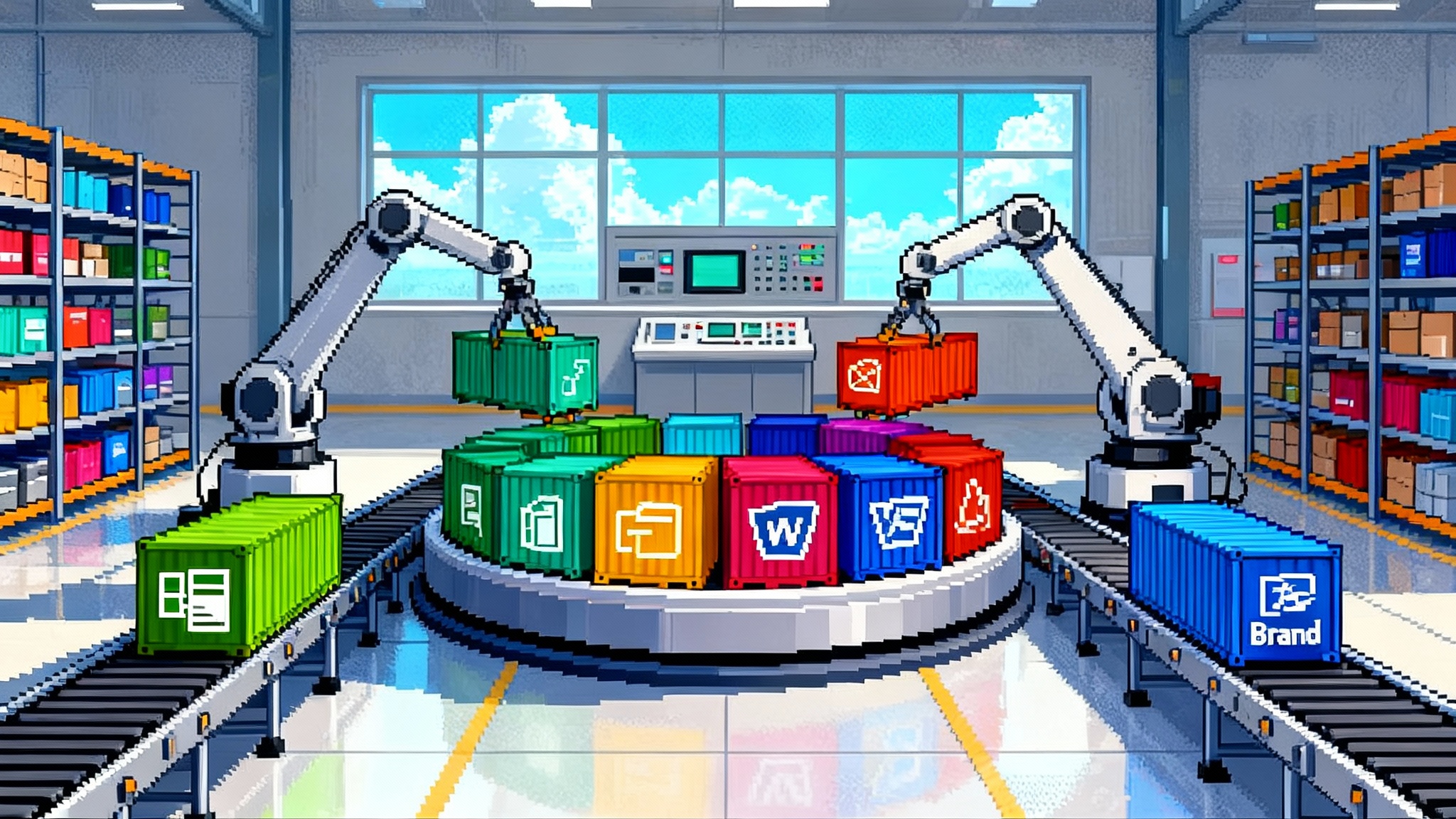
Claude becomes a composable agent runtime
On October 16, 2025 Anthropic introduced Agent Skills and the new /v1/skills endpoints, a system that lets Claude load specialized capabilities on demand across Claude apps, Claude Code, and the API. In Anthropic’s words, a Skill is a folder that bundles instructions, scripts, and resources, and Claude pulls it in only when it is relevant to the task. That small packaging idea has a large consequence: it gives enterprises a clear distribution format for agent functionality. Instead of building one-off bots with brittle prompts, teams can ship reusable, versioned Skills that behave like software packages. For product specifics, see Anthropic’s Skills launch details.
Enterprises do not really need more text generation. They need consistent work that respects policy, brand, timeline, and data constraints. Skill packaging speaks directly to these realities by making agent behavior addressable, versioned, and reviewable.
What a Skill really is
Think of a Skill as a shipping container for agent behavior. Inside the folder sits a SKILL.md file describing what the Skill does, when to use it, and how to invoke it. Alongside that file live small scripts, templates, and example assets. Because the Skill is a container, the same unit can travel anywhere Claude runs. It can be called in Claude’s chat interface, in Claude Code while you work in a repository, and inside server automations through the API. The result is one mental model for how agent capabilities are built, reviewed, versioned, and distributed.
A few design traits matter most:
- Modular loading: Claude scans available Skills and loads only the pieces it needs. This cuts latency and limits unnecessary exposure of files or instructions.
- Versioned packages: Skills can be versioned and upgraded without breaking callers. A marketing team can pin to a known good version while a developer previews a new version in a sandbox.
- Surface parity: The same Skill behaves consistently in Claude apps, Claude Code, and programmatic calls, which reduces duplicated work and misaligned behavior.
Why enterprises should care
Enterprises struggle with repeatability, governance, and portability far more than they struggle with creativity. Skill packaging tackles all three:
- Repeatability: If finance distributes an Excel Budget Model Skill that encodes specific formulas and chart styles, global teams can use it and know the output aligns with policy.
- Governance: Because Skills run in a controlled environment and are addressable by identifier, administrators can review, approve, and audit them like software artifacts.
- Portability: A Skill moves cleanly between environments, so a pilot in Claude Code can graduate to a production workflow behind the API without rewrites.
Workflow 1: Spreadsheet to deck, end to end
Here is a concrete pattern many teams will recognize.
Situation: A regional sales team needs quarterly review decks for 30 territories. Historically this takes analysts a week of spreadsheet work, manual chart styling, and slide-by-slide assembly.
Skills involved:
- xlsx Skill: Reads an input spreadsheet, validates data types, computes margin and growth deltas, and generates standardized charts.
- pptx Skill: Applies a preapproved template, lays out slides with titles, narrative bullets, and linked charts.
- brand-guidelines Skill: Enforces colors, typography, image treatments, and tone of voice in captions.
Execution:
- An operations script calls Claude with the message, files, and three Skill identifiers. It pins the Skill versions used last quarter for reproducibility.
- Claude loads the minimal instructions it needs from each Skill. It computes charts, assembles slides, and packages one deck per territory.
- Reviewers open the decks, suggest edits, and rerun only the affected territories by reusing the same Skill versions.
Result: The team collapses a week of manual effort into a 90 minute run, while every deck matches the template and the math. More important, the process becomes repeatable. New regions can be added without reinventing the pipeline.
Workflow 2: Brand guideline enforcement at scale
Consider a design studio that must ensure every artifact follows the company’s brand system. They ship a brand-guidelines Skill that includes:
- A SKILL.md that states when to apply the Skill and which assets it controls
- A style token file with color values, type scales, spacing rules, and do-not-use combinations
- A small validator script that checks images for minimum resolution and correct contrast ratios
- A template pack for presentations and documents
Now any copywriter, analyst, or product marketer can ask Claude to draft a document or deck and add a reference to use the brand-guidelines Skill. The Skill applies styles, nudges content into approved patterns, and flags violations for human review. The output is not just more volume. It is work the brand team can stand behind without becoming a review bottleneck.
Governance, policy, and the sandbox
Skills run inside Anthropic’s Code Execution Tool, which provides a secure sandbox with strict boundaries for commands and file operations. Skills are only available if the Code Execution Tool is enabled, which ensures scripts run in a controlled container rather than on a developer’s laptop. For technical details on allowed operations and how to turn the feature on, see the Code Execution Tool documentation.
Administration lives at two layers:
- Organization controls: Admins decide whether Skills are enabled for the org and who can upload custom Skills. Custom Skills are shared organization wide, which makes them discoverable and auditable.
- Version policy: Teams can treat Skill versions like software releases. Use a pinned version for production and promote new versions only after review. That gives you change control without blocking experimentation.
Together, the sandbox and org controls help security leaders answer two questions that matter to regulators and customers: what ran, and under which rules. Logs tie an output back to a specific Skill version and invocation, which translates naturally into evidence for audits.
From monolithic bots to shareable capabilities
A monolithic bot tries to do everything with one giant prompt and a bag of tools. It is hard to test, hard to govern, and nearly impossible to reuse safely. Skills invert that shape. Each Skill encapsulates a single capability and declares what it needs. Claude then composes Skills at runtime to complete a task.
The right analogy is the early era of cloud functions. Before them, teams shipped big applications. Then they discovered small, single purpose functions that could be stitched together. The function boundary became the unit of scaling and governance. Skills create that boundary for agents.
Internal registries today, marketplaces tomorrow
If Skills are the packaging format, registries become the distribution layer.
- Internal registry: A private catalog where teams publish and discover Skills with metadata, owners, and change logs. Security can require review before a Skill appears in search. Procurement can track usage and assign cost centers.
- Marketplace: Once packaging and governance stabilize, expect a curated marketplace that lists verified Skills from software vendors. If your company runs on a customer relationship management system or a business intelligence suite, you will want an official Skill that encodes the vendor’s best practices for importing data, building dashboards, or running analyses.
This two step evolution mirrors the path of internal package registries and later public ecosystems like container registries and app stores. The difference is that Skills are not full applications. They are composable behaviors that slot into your own workflows, which makes adoption less all or nothing.
How this shifts the agent stack
Three practical shifts show up quickly as Skills roll out:
- Distribution: You ship Skills, not bots. A customer success team might carry six Skills that cover renewals, churn analysis, and playbook generation. Each Skill can be updated independently.
- Runtime: The agent runtime is Claude, which dynamically loads Skills alongside tools like web retrieval or code execution. Composition happens at request time rather than during deployment.
- Integration: Software teams expose their data through existing APIs or Model Context Protocol servers. They teach Claude how to use that data by publishing Skills that describe the right sequences and guardrails.
- Testing: You test a Skill like you test a library. Provide fixtures, expected outputs, and edge cases. Record runs for auditing and regression checks.
A Monday morning plan you can follow
A pragmatic adoption plan keeps scope small and value obvious.
- Pick one workflow where quality is measurable. Spreadsheet to deck, policy memo generation, or document analysis pipelines are ideal because they mix structure and narrative.
- Draft a Skill that targets the slowest steps. Keep it single purpose. If it grows beyond a page of instructions and a couple of helper scripts, split it.
- Pin a version and run a two week pilot. Measure time saved, error rate, and rework required. Keep a baseline so you can show lift clearly.
- Stand up a lightweight internal registry. Require an owner, a changelog, and at least one test artifact for every Skill.
- Share the success story in your internal wiki. Adoption follows social proof. Engineers and analysts will volunteer the next candidate workflows.
If you want to sketch the starting point, a minimal SKILL.md often looks like this:
---
name: quarterly-deck
description: Generate territory review slides from an xlsx input using approved charts and a standard template. Produces a PPTX file and a short executive summary.
---

# Quarterly deck skill

## When to use
- Input is a validated xlsx with columns: territory, revenue, margin, growth
- Output must be a PPTX with an executive summary and one slide per territory

## Steps
1. Validate the xlsx and fill missing values per policy
2. Build charts with the approved style tokens
3. Lay out slides with the standard template
4. Export a pptx and a text summary for leadership

## Guardrails
- Do not invent data. If a value is missing, flag it and continue
- Use only approved colors and typography from the shared style file
This is not magic. It is disciplined packaging of what your best analyst already does.
Competitive context across the ecosystem
Every major lab is racing to make agents practical at work. OpenAI is pushing agent frameworks for developers. Google is threading agents into productivity suites. Anthropic’s move stands out because it narrows the problem to a unit enterprises can govern. Instead of promising a general purpose agent, it delivers a format that fits how companies already ship software and policy.
If you are tracking the broader trend, compare this packaging approach with adjacent moves:
- The workplace model described in the Asana’s AI Teammates model shows how task ownership and policy can live beside human teams.
- For engineering teams, Agent HQ for coding agents illustrates how repositories become mission control for controlled automation.
- If you are thinking about governance, AgentKit for governed products walks through patterns that make agents shippable under the same standards as software.
Together these signals point to a new norm. Enterprises will package agent capabilities into small, discoverable units that snap into existing systems and workflows. Skills are Claude’s implementation of that idea.
Risks and limits to watch
No packaging format solves judgment. If a Skill encodes a flawed process, you will get flawed outputs faster. Watch three failure modes in particular:
- Skill sprawl: Without a registry, teams might create near duplicates that drift apart. Solve this with ownership and naming rules.
- Hidden side effects: Scripts that run inside Skills can have unintended consequences if they touch files carelessly. Keep Skills pure where possible. When they must modify files, test with small fixtures and review changes.
- Version mismatch: If one Skill expects another Skill’s behavior to stay constant, upgrades can break composition. Treat cross Skill contracts like interface contracts, write tests, and publish change notes.
What to expect over the next year
If this approach takes hold, expect three milestones by mid 2026:
- A visible rise of internal Skill registries at large companies, with security and compliance workflows integrated into the publish step.
- Vendor backed Skills for core enterprise systems that cut time to value for deployments. Early adopters will bundle these with reference data and opinionated defaults.
- A basic marketplace that sits on top of registries and lets teams trial a Skill, capture telemetry, and move to a paid plan inside procurement guardrails.
There is nothing hypothetical about the underlying mechanics. Skills already run across Claude apps, Claude Code, and the API, and they require the Code Execution Tool that provides a well bounded sandbox. The remaining work is an execution challenge inside companies.
The bottom line
Anthropic did not just ship a feature. It shipped a distribution format for agent behavior. Packaging matters. When the unit of work is a Skill, your organization can review it, version it, share it, and compose it. That is how complex work gets automated safely. If you care about real outcomes rather than demos, start small, ship one useful Skill, and grow your registry from there. Modular Skills look like the future standard for enterprise agents not because they are flashy, but because they make the craft of automation legible and governable at scale.